MagicBrowse
MagicBrowse helps agents use legacy commerce websites by combining browser automation, checkout-specific behavior, and a growing site memory.
- Browser-use agent purpose-built for real e-commerce navigation and checkout flows.
- LLM planner with vision plus a high-speed DOM navigator for checkout execution.
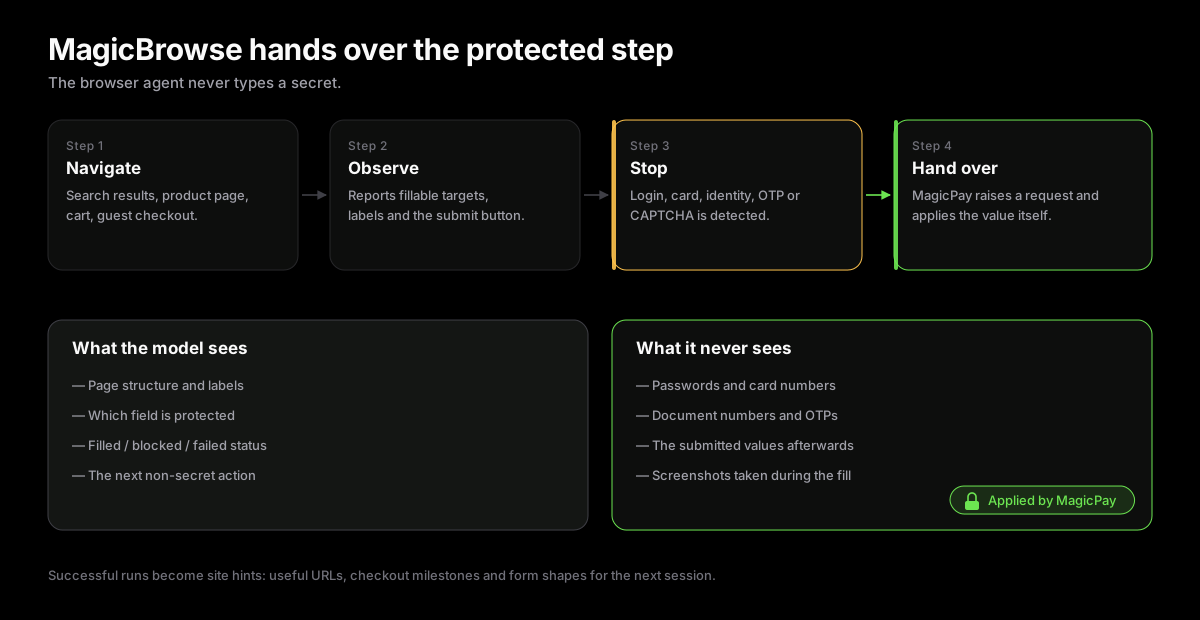
- Stops at login, payment, identity, CAPTCHA, and every other protected step.
- Learns from successful runs through site memory, runtime hints, and checkout traces.
Commerce-First Browser Use
General browser agents are broad and brittle around checkout. MagicBrowse narrows the problem: search result pages, product pages, carts, guest checkout, provider handoff, form observation, and sensitive-step detection. The active package is @nuanu-ai/magicbrowse, and the CLI is @nuanu-ai/magicbrowse-cli.
Sensitive-step Handoff
MagicBrowse should not type passwords, card values, passport details, OTPs, or final payment confirmations directly from model context. When it observes a protected form, MagicPay creates a request, resolves the approved artifact, writes the value through the trusted fill path, and returns only the continuation state the browser agent needs.
Site Memory
MagicBrowse teaches itself after each successful checkout. Successful commerce traces can be converted into site-specific hints: useful URLs, checkout milestones, button labels, form shapes, provider handoff patterns, and recovery notes. These hints speed up future runs and reduce repeated exploration, but they never override live page state, policy, or user approval. Over time, this becomes an agentic knowledge base of internet commerce: a practical memory of how real merchants, booking sites, marketplaces, and checkout flows work for AI agents.